

Solvent Instead of Toxic Reagents: Chemists Develop Environmentally Friendly Method for Synthesising Aniline Derivatives
.jpg "Solvent Instead of Toxic Reagents: Chemists Develop Environmentally Friendly Method for Synthesising Aniline Derivatives")
An international team of researchers, including chemists from HSE University and the A.N. Nesmeyanov Institute of Organoelement Compounds of the Russian Academy of Sciences (INEOS RAS), has developed a new method for synthesising aniline derivatives—compounds widely used in the production of medicines, dyes, and electronic materials. Instead of relying on toxic and expensive reagents, they proposed using tetrahydrofuran, which can be derived from renewable raw materials. The reaction was carried out in the presence of readily available cobalt salts and syngas. This approach reduces hazardous waste and simplifies the production process, making it more environmentally friendly. The study has been published in ChemSusChem.
Anilines are compounds in which a nitrogen atom is bonded to an aromatic ring. This structure makes the molecule both stable and easily modifiable: reactions can occur at the nitrogen atom and on the aromatic ring, while the core framework remains intact. As a result, the basic structure can give rise to a wide variety of derivatives with diverse properties—from painkillers and decongestants to dyes, polymers, and electronic materials.
Aniline derivatives are typically produced using alkyl halides—reagents with chlorine or bromine atoms attached to a carbon chain. Although this method is reliable, it has several drawbacks: alkyl halides are expensive and toxic, and their use generates waste that requires careful disposal. Moreover, these substances corrode the metal of industrial reactors and pipelines, leading to faster equipment degradation and failure.

Scientists at the A.N. Nesmeyanov Institute of Organoelement Compounds of the Russian Academy of Sciences and HSE University have proposed a new method for synthesising aniline derivatives. Instead of using alkyl halides, they employed tetrahydrofuran (THF)—a common solvent that typically serves only as a reaction medium and does not participate in the reaction. In the new method, however, THF acted as a reactant: its ring opened to form an intermediate compound, which then reacted with aniline to produce N-alkylanilines.
The reaction was catalysed by cobalt salts—a more abundant and affordable alternative to the noble metals typically used as catalysts. The scientists also employed syngas, a mixture of hydrogen and carbon monoxide. While syngas is commonly used industrially to produce fuels and methanol, in this case it helped initiate the desired transformations and replaced more hazardous reagents. Under these conditions, the researchers successfully obtained the target compounds with high efficiency.
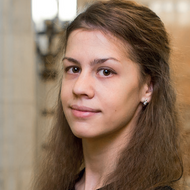
Evgeniya Podyacheva
'The method has proven to be highly versatile. By adjusting the reaction conditions, it is possible to produce compounds with either one or two carbon chains. This is significant because these different variants have applications across a wide range of fields,' explains Evgeniya Podyacheva, Associate Professor at the Joint Department of Organoelement Chemistry with the Nesmeyanov Institute of Organoelement Compounds of the Russian Academy of Sciences.
Moreover, the researchers successfully synthesised a compound used in the production of tetracaine, a well-known local aesthetic. This demonstrates that the method is suitable not only for laboratory experiments but also for pharmaceutical manufacturing.

Denis Chusov
'We have shown that a common solvent can be transformed into a valuable reagent. Using THF, which can be derived from biomass, makes the process more sustainable and less reliant on non-renewable resources. In addition, the method reduces waste and eliminates the need for toxic reagents. In the future, it can be extended to synthesise other aniline derivatives that are in high demand in medicine, materials science, and electronics,' says Denis Chusov, Professor at the Joint Department of Organoelement Chemistry with the Nesmeyanov Institute of Organoelement Compounds of Russian Academy of Sciences of the HSE Faculty of Chemistry.

See also:

HSE University to Develop Predictive Analytics System for Icebreaker Motors
Industrial automation is one of the key applications of artificial intelligence. A predictive analytics system for large electric motors is among the solutions being developed for the industry as part of HSE University’s Strategic Technological Project ‘Multi-Agent Platform of AI Solutions for Industry-Specific Tasks.’ What is predictive analytics, how can it improve the operation of electric motors, and what specialists joined forces to develop this technology? Anton Zarubin, Dean of the School of Computer Science, Physics, and Technology at HSE University–St Petersburg and the project development coordinator, explains in this interview with the HSE News Service.
How to Assess Students’ Knowledge in the Age of AI
A researcher at HSE University has proposed a flowchart to help lecturers decide how to assess students who use artificial intelligence. It shows where the use of AI should be restricted and where it can be incorporated into the learning process. The article has been published in IT Professional.
5th Fall into ML Conference to Bring Together Leading AI Researchers
The AI and Digital Science Institute at the HSE Faculty of Computer Science invites researchers, developers and everyone shaping the future of technology to the fifth, anniversary edition of the Fall into Machine Learning conference (Fall into ML 2026). The event will take place on October 23–24, 2026, at the HSE Cultural Centre in Moscow and will become the key meeting point for Russia’s AI community.
HSE University Expands Cooperation with Malaysia in Technology Foresight
HSE University researchers will take part in a study of the future of engineering education in Malaysia, while the Malaysian Industry-Government Group for High Technology (MIGHT) will use the iFORA big-data analysis system to validate the findings of its foresight research. These are the outcomes of a visit by HSE representatives to Kuala Lumpur.
Scientists Train Neural Network to Generate Process Plans from 3D Models
Researchers at the HSE FCS AI and Digital Science Institute have developed CAD2TechSpec, a framework that converts 3D models of mechanical parts into machining process plans—step-by-step instructions for machine tools. The solution aims to reduce the time required for the design and preparation of technical process documentation in mechanical engineering, aircraft manufacturing, and other high-tech industries. The study findings have been published in PeerJ Computer Science.
Biologists Discover 'Molecular Fingerprint' of Preeclampsia
Researchers at HSE University employed a new method to model hypoxia in placental cells during pregnancies complicated by preeclampsia and identified molecular markers of tissue hypoxia. Since hypoxia is one of the key mechanisms underlying preeclampsia, these findings are important for a more accurate and timely diagnosis of the disease and for the development of effective treatment methods. The paper has been published in Placenta.
Laboratory of Future Networks: HSE Telecommunications Research Institute Develops 5G/6G Research Testbed
The 5G/6G testbed at the HSE Telecommunications Research Institute is becoming a research platform, an educational laboratory, and a foundation for developing new software components for future networks. It makes it possible not only to observe how a mobile network operates, but also to change its operating conditions and measure the results: data-transmission speed, latency, errors, radio-resource utilisation, and other parameters. Based on the testbed, researchers plan to develop MIMO, O-RAN, xApp, and IAB technologies, as well as experiment with artificial intelligence.
‘Hedgehog’ Versus ‘Relatives’: Researchers Measure How the Brain Responds to Unexpected Words During Natural Speech
Russian neurophysiologists, including researchers from HSE University, have demonstrated the feasibility of using event-related fields (ERFs) to study brain activity during natural speech perception. The researchers showed that this approach can be applied not only to individual words but also to continuous speech. Their findings indicate that words whose meanings differ significantly from the preceding context require longer processing times. The study also reveals that the brain processes function words in two stages: first, it identifies their grammatical role and then uses this information to predict the next word. The study has been published in Frontiers in Human Neuroscience.
HSE Researchers Create New Corpus of Early Child Speech in Russian
Researchers at the HSE Centre for Language and Brain have presented RusLan-M, an open multimedia corpus that makes it possible to trace the development of early child speech in Russian from first words to the emergence of complex grammatical constructions. The database contains around 41 hours of video recordings and more than 35,000 child utterances. The new resource will help researchers study more precisely how children acquire Russian and, in the longer term, develop more reliable tools for assessing speech development. The study has been published in Language Resources and Evaluation.
Hybrid Intelligence: Competencies in the Age of AI Discussed at Technoprom-2026
Artificial intelligence is not creating new professions, but rather transforming the nature of existing ones. This was the conclusion reached by participants in the panel session ‘Hybrid Intelligence: Digital and Human Drivers of Development,’ organised by the Institute for Statistical Studies and Economics of Knowledge (ISSEK) at HSE University as part of the 13th International Forum of Technological Development (Technoprom-2026). The experts discussed how the nature of work is changing, which skills are becoming increasingly sought after, and what prevents companies from fully capitalising on new technologies.