

‘We Will Develop the Sports That Staff and Students Are Fond of’
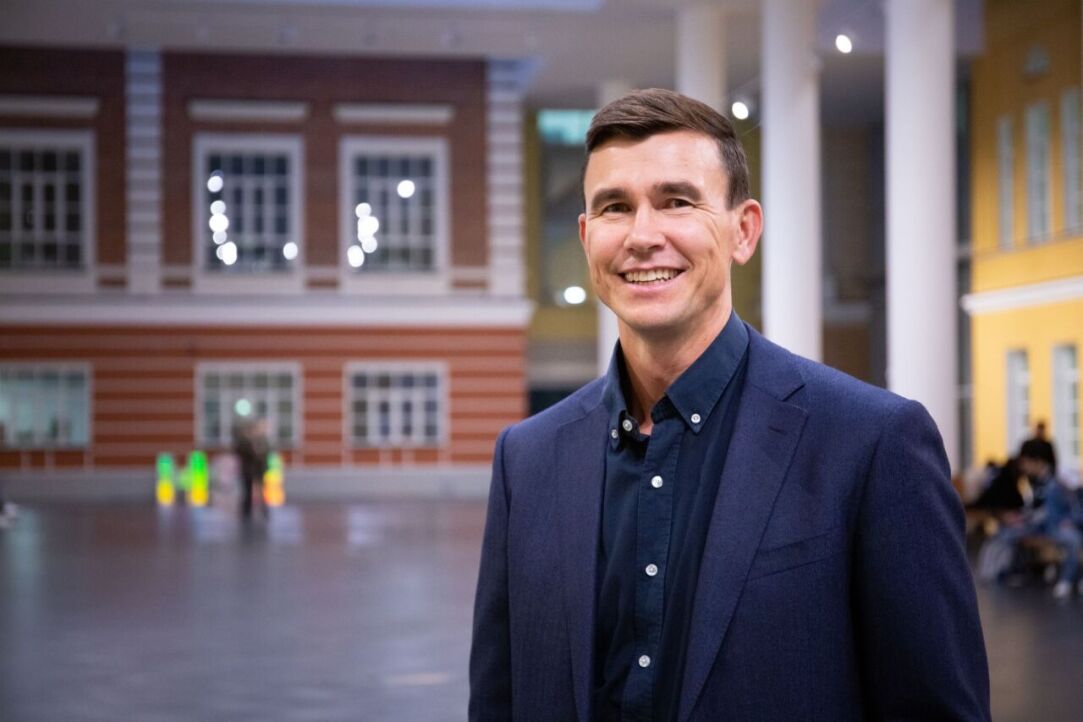
The HSE Corporate Academy has established the Sports Community Support Centre, headed by Olympic rowing champion Sergey Fedorovtsev. He spoke with the HSE News Service about his career, university sports, and the centre’s work.
— How did you become an athlete? Why did you choose rowing?
— I was born in Rostov-on-Don, and I was an active child. I tried out many sports, showing good results and the potential to become a talented athlete, but my professional career started in rowing. First, I wanted to be the best in the group, then the best in city competitions, and then in 1996 I decided that I wanted to become a professional athlete and go to the Olympics.
Academic rowing is a unique sport—the only one in which you move with your back towards the finish line. It can be either an individual or team effort, and rowers use all muscle groups. Competitions are held on the water and outdoors, and the locations are constantly changing.
— How did your sports career develop?
— I became a champion in young men’s competitions, and then the adult champion of Russia. In the spring of 2000, together with senior athletes, we assembled a great team to go to a qualification regatta, and then to the Olympic Games. But I fell ill unexpectedly and was diagnosed with a complicated condition. The doctor advised me to change my sport, but I decided not to. This was followed by the most difficult period of physical training in my life, including an unbearable workload and endless workouts. In 2001 I won silver in the Russian championship and returned to the national team. In 2003 I qualified at the World Championships, then in 2004 I won the Olympic Games in Athens. I was the youngest in the team, and I was assigned the leading role in the rowing crew.
Our victory in the Olympics came as a surprise to many people, but we prepared very intensely both physically and psychologically. Although there were other victories after the Olympics, that one remained the most important for me.
— You came to work at HSE University in 2022 at the Department of Physical Training. How did that happen?
— Quite by accident. An HSE student called me and said he would like to train with me. I didn't know this student, but he somehow managed to persuade me to join the training. There were two teams there, a men's and a women's team. Now we train all year round, both on the water and on rowing machines in winter, and the teams show good results.
— How did you come up with the idea of creating the Sports Community Support Centre?
— During a Sunday jog with HSE Rector Nikita Anisimov, we discussed possible trajectories for developing sports at the university.
There are a lot of fans of various sports among the students and staff of HSE University. There is a Running Club—a community of running enthusiasts headed by Anna Kozyreva, Head of the Promotions and Communications Unit of the Faculty of Computer Science. I am very glad that she agreed to work part-time at our centre.
— Who else among your colleagues is actively involved in sports?
— It’s well known that HSE University Rector Nikita Anisimov is fond of sports: he constantly participates in runs, setting an example for others. Vice Rector Shamil Akhmetov is fond of football, Dmitry Zemtsov does fencing, and Alexey Koshel plays chess (we once played a couple of games, and I lost both). I hope that other colleagues will find an opportunity to join university communities in their sports.
The HSE Department of Physical Training headed by Oleg Bulykin, a great leader and former successful athlete, has also contributed to the development of sports communities at HSE University.
— Does the Sports Community Support Centre have a plan for the next five years? How many employees and students do you aim to involve in sports?
— Two years ago, at the Russia–Country of Sports international forum, President Vladimir Putin said that 70% of Russian citizens should be regularly involved in sports by 2030. I think our university can also focus on this indicator. We will develop the sports that staff and students are fond of.
The Sports Community Support Centre aims to create a favourable environment for the development of sports and physical education and strengthen ties between various teams. Sports and active recreation are a good way to overcome stress, achieve psychological and emotional relief, and maintain and strengthen health—and everyone has the opportunity to try it.
Today, for many people, HSE has become a university that not only provides high-quality education, but also pays great attention to sports. We will strengthen and develop this image.

See also:

Physicists Discover What Happens Inside a Stable Vortex
Large vortices with characteristic spiral arms are often observed in the atmosphere and the ocean. Physicists from HSE University have explained how these structures form and why they retain their shape. The researchers found that velocities at points located along the same vortex arc remain correlated even over long distances. At the same time, this correlation weakens rapidly with increasing distance from the vortex centre. These differences help explain the formation of spiral arms and may improve models of atmospheric and oceanic currents. The findings have been published in Physical Review Fluids.
‘The Peak of Stupidity’ and ‘The Valley of Despair’: HSE Economists Propose an Explanation for the Dunning–Kruger Effect
The Dunning–Kruger effect, which describes a sharp surge in self-confidence among beginners followed by an equally rapid decline as they gain experience, can be explained by the nature of the learning process and the acquisition of new knowledge. This conclusion was reached by Andrey Vorchik of the HSE Faculty of Economic Sciences together with independent researcher Murat Mamyshev. They developed a mathematical model of learning and demonstrated how subjective confidence is formed and changes as knowledge accumulates, as well as how teachers can reduce the ‘valley of despair’ experienced by learners.
Physicists at HSE University and FIAN Discover Way to 'Photograph' Sound for Testing Materials Used in 6G Communications
Researchers at HSE University, in collaboration with colleagues from the Lebedev Physical Institute of the Russian Academy of Sciences (FIAN), have developed a method for rapidly determining how firmly a film is bonded to a substrate. This is important for the creation of ultrahigh-frequency acoustic filters, which are key components of next-generation 5G and 6G communications. For the first time, researchers have succeeded in measuring the lateral rigidity of the bond between a two-dimensional material film and a substrate in this way. The study results have been published in Applied Physics Letters.
Biologists Discover Unique Properties of MiR-93-5p MicroRNA in Prostate Cancer
Researchers at the International Laboratory of Microphysiological Systems of the HSE Faculty of Biology and Biotechnology investigated how different isoforms of the same microRNA influence gene function in prostate adenocarcinoma. The study found that in some cases, microRNAs can reinforce each other’s effects by targeting and suppressing the same genes. This finding offers a fresh perspective on the molecular mechanisms underlying tumour development and on the search for disease biomarkers. The results have been published in PeerJ.
Researchers Discover How Spelling Errors Slow Down Reading in Russian
Psycholinguists from the Centre for Language and Brain at HSE University–St Petersburg have shown that words that are frequently misspelled are processed more slowly by readers, even when presented with the correct spelling. The researchers confirmed this effect for the first time using Russian-language materials and found that response speed is most strongly linked to how confidently individuals can distinguish the correct spelling of a word from an incorrect one. The study has been published in The Mental Lexicon.
HSE Economists Reveal How the Wage Gap Emerges Among Vocational School Graduates
HSE researchers examined the careers of 600,000 graduates of Russian secondary vocational education programmes and found that at the start of their careers, the gender wage gap reaches 23%, doubling after three years. This disparity is largely due to male and female students choosing different occupations when enrolling in vocational schools. These were the findings made by Sergey Roshchin, Natalya Yemelina, and Ksenia Rozhkova from of the HSE Faculty of Economic Sciences. The article has been published in Educational Studies.
HSE Researchers Make Aldehydes Perform Dual Function
Chemists from HSE University have discovered a way to carry out a reductive addition reaction without using an external reducing agent. Instead, the required 'resource' is supplied by the aldehyde itself, one of the reaction participants. This approach helps prevent unwanted side reactions, reduces toxicity, and simplifies the production and synthesis of organic molecules, including those used in the manufacture of medicines. The study has been published in Journal of Catalysis.
HSE Scientists Develop Method to Compress Large Language Models Without Losing Quality
Researchers from the AI and Digital Science Institute at the HSE Faculty of Computer Science have developed a new compression method for large language models such as GPT and LLaMA that reduces their size by 25–36% without additional training or significant loss of accuracy. This is the first approach to use mathematical transformations—specifically, rotations of model weights—to make models more amenable to compression with structured matrices. The study results have been published in ACL Findings 2025. The code is available on GitHub.
Machine Learning Models Can Help Reduce Volatility and Boost Stock Market Returns
The use of machine learning models makes it possible to achieve greater accuracy in predicting risks in the Russian stock market compared to classical econometric approaches. The predictive power of these models increases by 23%, while the average investor’s return can reach up to 13% per annum. These conclusions were drawn by Nikita Lysenok from the Department of Financial Market Infrastructure at the HSE Faculty of Economic Sciences. The paper has been published in Fundamental and Applied Mathematics.
HSE Study Reveals Imbalance in the Generative AI Market
Researchers at HSE University analysed how effectively the global generative artificial intelligence market converts investment into real revenue, concluding that AI is currently developing faster than it is paying off. The results have been published in the journal Foresight and STI Governance.