

HSE Scientists Explain How to Identify Brain Areas Critical for Language Function During Surgery
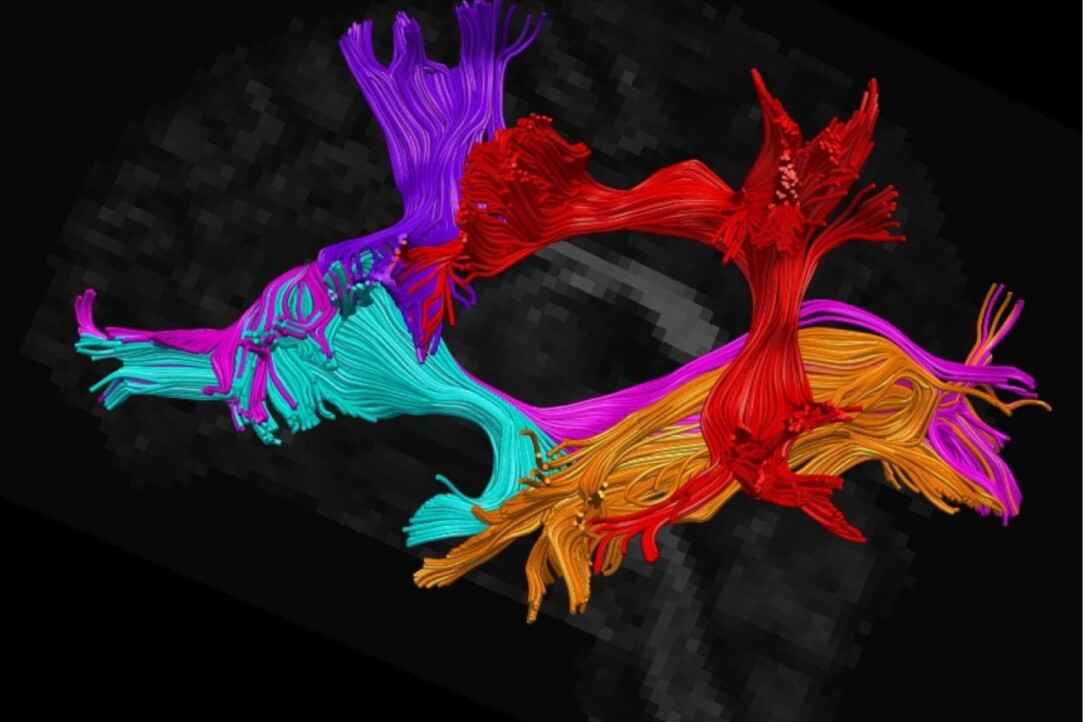
The HSE Centre for Language and Brain conducted a course on tractography, a method that enables visualisation of key brain connections and helps surgeons avoid damaging language-critical areas during surgery. The course was attended by neurosurgeons and radiologists from Moscow and other Russian regions who are interested in methods of preoperative language mapping.
Tractography is a technique for constructing 3D models of the brain’s pathways using diffusion-weighted MRI data. In the brain’s white matter, water primarily diffuses along nerve fibres, and this directionality can be reconstructed using specialised algorithms. One such method is diffusion tensor imaging (DTI), which allows researchers to assess the degree of water molecule diffusion alignment and to map the brain’s white matter tracts.
During the training course, participants not only discussed various theoretical issues related to preoperative and intraoperative mapping of language function and tracts but also gained hands-on experience in manually reconstructing models using the TrackVis software tool, based on pre-processed structural MRI images.
A dedicated lecture focused on linguistic tests for intraoperative mapping, a technique used by clinicians to identify language areas during surgery.

'Localising language function is a critical step in planning surgical interventions for patients with lesions in the language-dominant hemisphere. Experts at the Centre for Language and Brain have accumulated significant experience in preoperative language mapping, which minimises the risk of complications and improves the effectiveness of surgical interventions. We are pleased to share our knowledge and practical recommendations with our surgical colleagues to advance modern neurosurgery and improve the quality of patient care,' said Anna Komissarenko, Junior Research Fellow at the HSE Centre for Language and Brain.
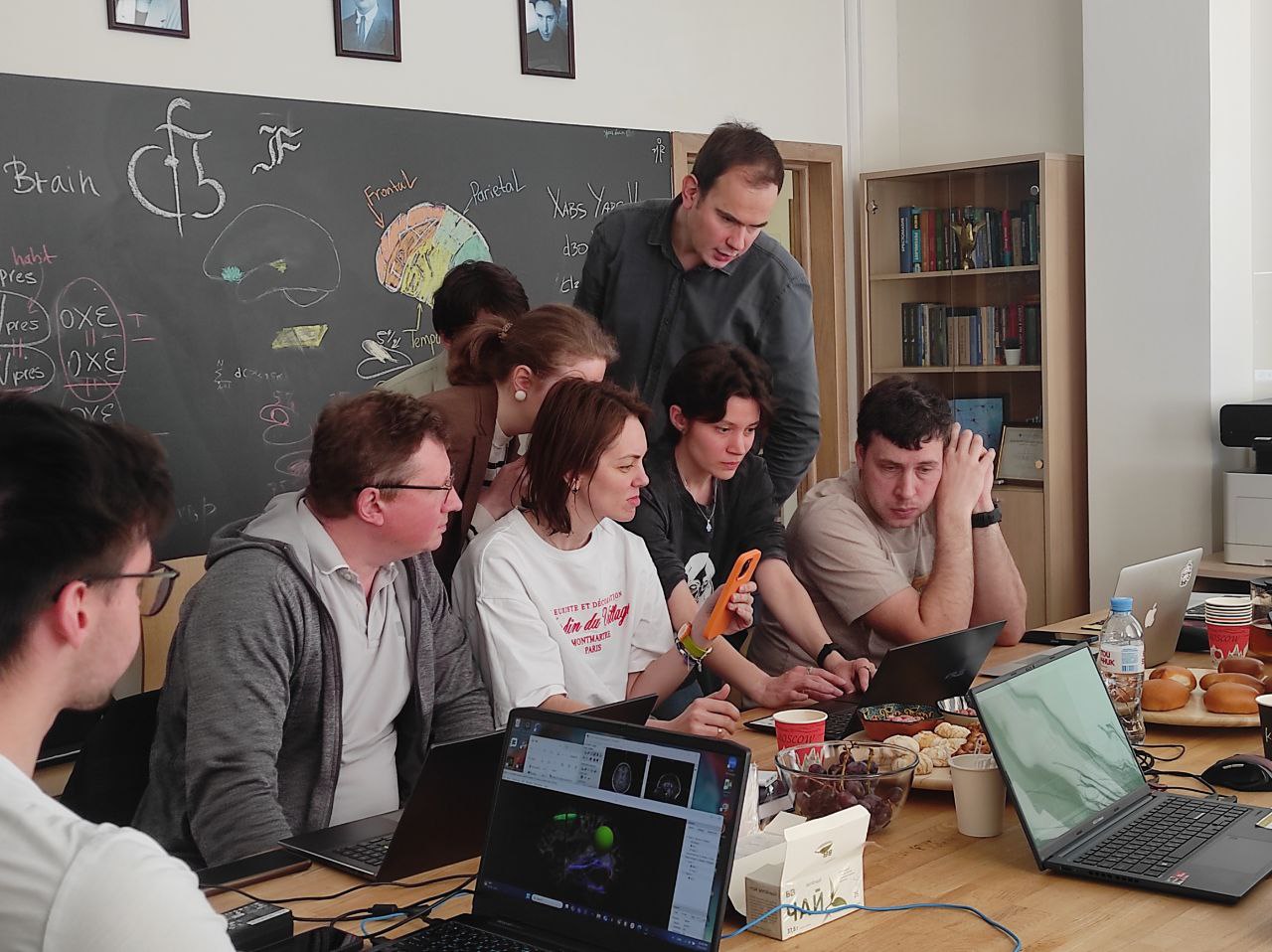
The HSE Centre for Language and Brain has extensive expertise in providing linguistic support for neurosurgical patients. An important focus of the centre’s work is the development of specialised linguistic tests to identify functionally significant language areas during the planning and performance of neurosurgical operations. The centre’s specialists are investigating how the brain’s language function reorganises in cases of tumours and epilepsy, with special emphasis on the role of white matter pathways in supporting language function. The findings are used in both research and clinical practice—during preoperative mapping and intraoperative language monitoring. The practical course generated great interest among participants and served as a platform for interdisciplinary dialogue between neurolinguists and clinicians.
Anastasia Parshunina, neurosurgeon
'During surgery, it is essential to balance the radicality of the operation with the patient’s functional status. When removing a tumour near the language area in a patient with intact language function, it is crucial that the patient retains the ability to speak and understand speech after treatment. Therefore, the ability to reconstruct tracts is essential for preoperative treatment planning and for understanding the relationship between the tumour and functionally significant structures. The course deepened our understanding of anatomical principles and demonstrated the potential of 3D modelling for preoperative planning. We are thankful to the course organisers. During the two-day course, we gained valuable theoretical knowledge and practical skills in reconstructing pathways using the TrackVis software.
The Centre for Language and Brain thanks all course participants and invites everyone to stay updated on upcoming courses and educational programmes.

See also:

HSE Students Among Winners of Yandex High-Tech Startup Accelerator
Yandex has announced the results of its Yandex AI Startup Lab accelerator, whose final round featured 12 IT projects. Over the course of three months, their creators—students and young entrepreneurs—worked alongside the company’s experts to develop their products. Four startups in digital marketing, medicine, and robotics were named the best, with their teams receiving cash prizes and cloud resource grants. Among them was Gradius, a startup founded by students from HSE University.
‘Any Real-Economy Company Can Use Our Products’
The HSE Centre for Financial Research and Data Analytics combines fundamental and applied work, including in areas unique to Russia such as the connection between sentiment in the media and social networks and financial markets. The HSE News Service spoke with the centre’s director, Professor Tamara Teplova, about its work.
Researchers Find More Effective Approach to Revealing Majorana Zero Modes in Superconductors
An international team of researchers, including physicists from HSE MIEM, has demonstrated that nonmagnetic impurities can help more accurately reveal Majorana zero modes—quantum states considered promising building blocks for quantum computing. The researchers found that these impurities shift the energy levels that typically obscure the Majorana signal, while leaving the mode itself largely unaffected, thereby making its spectral peak more distinct. The study has been published in Research.
New Development by HSE Scientists Helps Design Reliable Electronics Faster at a Lower Cost
Scientists from HSE MIEM have developed a new approach to modelling electrothermal processes in high-power electronic circuits on printed circuit boards (PCB). The method allows engineers to quickly and accurately predict how electronic components heat up during operation, helping prevent overheating and potential failures. The results have been published in Russian Microelectronics.
'Where Accurate Prediction of the Outcome Is Impossible, Stochastic Methods Come into Play'
The Laboratory of Stochastic Analysis and its Applications at HSE University studies systems and events in which randomness plays a central role. The goal is to predict various phenomena and how they evolve over time. The HSE News Service interviewed the laboratory's head Vladimir Panov and its academic supervisor Valentin Konakov.
Mathematical Physics at HSE University Goes International
The HSE University International Laboratory for Mirror Symmetry and Automorphic Forms and the Beijing Institute of Mathematical Sciences and Applications (BIMSA) held a joint online conference on mathematical physics. The results of the laboratory research presented at the event will be published in leading academic journals.
HSE Biologists Identify Factors That Accelerate Breast Cancer Recurrence
Scientists at HSE University have identified a molecular mechanism underlying aggressive breast cancer. They found that the signals supporting tumour growth originate not from the tumour itself but from its microenvironment. The researchers also demonstrated that reduced levels of the IGFBP6 protein in the tumour microenvironment lead to the accumulation of macrophages—immune cells associated with a higher risk of cancer recurrence. These findings already make it possible to assess patient risk more accurately and may, in the future, enable the development of drugs that target cells of the tumour microenvironment. The study has been published in Current Drug Therapy.
HSE University and Moscow DIT Partner to Advance 5G and 6G Networks
The Moscow Department of Information Technology and HSE University have signed a cooperation agreement in the field of innovative development of the capital’s IT infrastructure. The parties agreed on joint research into modern and promising communication technologies, including 5G and 6G, as well as AI, the Internet of Things, and other smart city technologies.
HSE University Presents Research Results at AI Conference in Oman
In April 2026, the International Conference on Intelligent Systems and Artificial Intelligence Applications (ISAA 2026) was held at the University of Nizwa in the Sultanate of Oman. The event was co-organised by HSE University, the University of Nizwa, and the University of Technology and Applied Sciences–Ibri. Researchers from HSE University were among the key speakers at the conference.
HSE’s CardioLife Test Among Winners of Data Fusion Awards 2026
The CardioLife genetic test—a development by the Centre for Biomedical Research and Technologies of the AI and Digital Science Institute at HSE University’s Faculty of Computer Science—has won the All-Russian cross-industry Data Fusion Awards, which recognise achievements in data and AI technologies. The project took first place in the Science–Business Partnership category, demonstrating a successful model for transferring technology from university research into the real healthcare sector.